

Sausage Rolls
On finding comfort in a strange new world

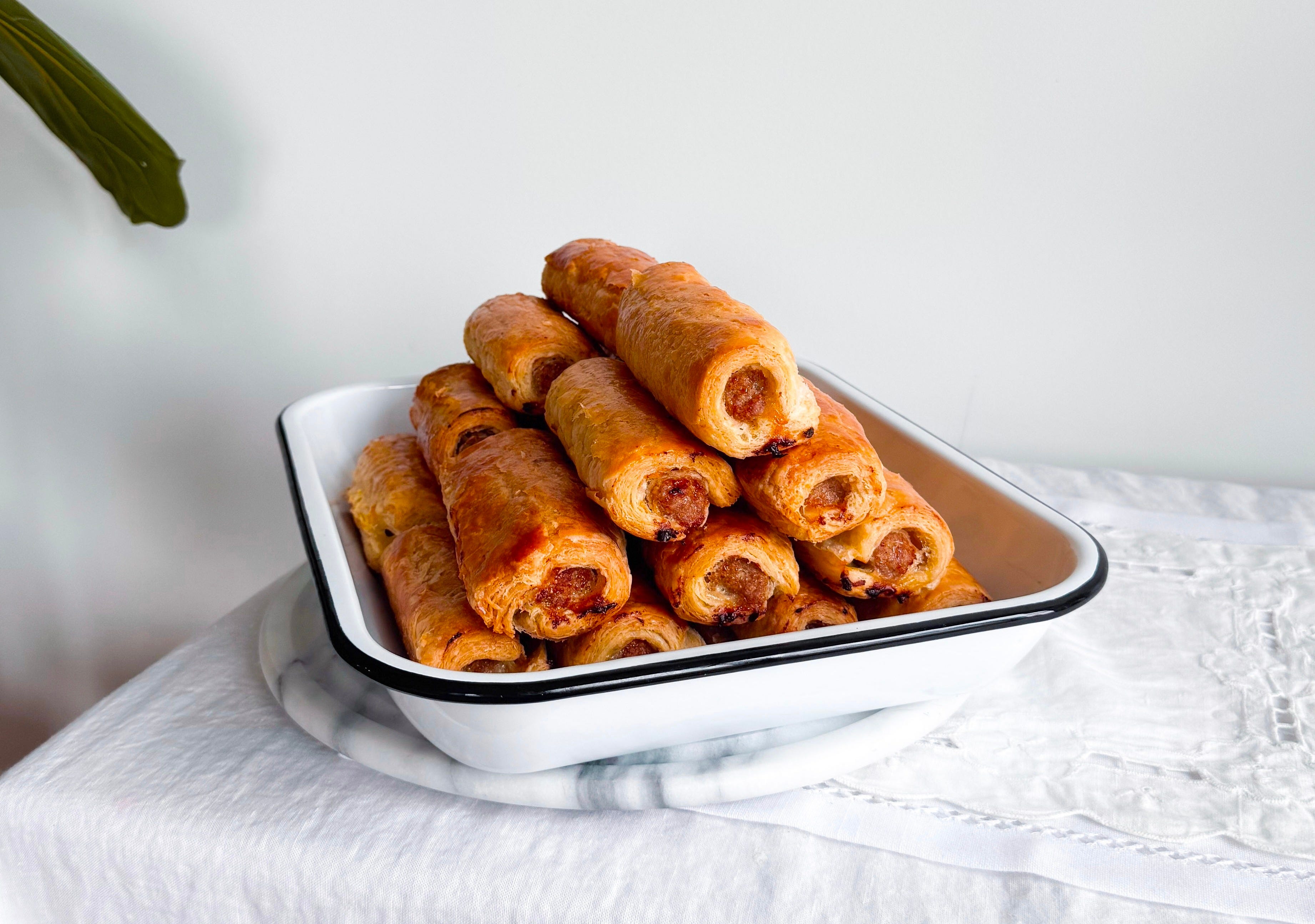
It’s Thanksgiving week in America, and I can already hear the cries: “No pie"*?! No sweet potatoes?! Friends, settle yourselves and pour out a big one, because what I have to offer you is as true a Thanksgiving dish as ever there was.
*But if you really do want a pie recipe, I highly recommend this one.
Like the weary pilgrims of yore, I too landed in America many moons ago with little preparation and no comprehension of the local foodstuffs. Unlike them, I suffered not. When you come from a drab London suburb to the technicolour of America, let’s just say the losses aren’t the first thing you notice.
To a nine year-old Lilli, the grocery store was Disneyland (a Food Emporium, to be exact). Froot Loops and blue raspberry Go-Gurt and E-Z squirt purple ketchup were screechable sights. Food here was so fizzed up and vibrant that reaching for the shelves felt like sticking our hands right inside the telly. Porridge? Pasties? See ya never. It was 2001 in America and the locals were providing.
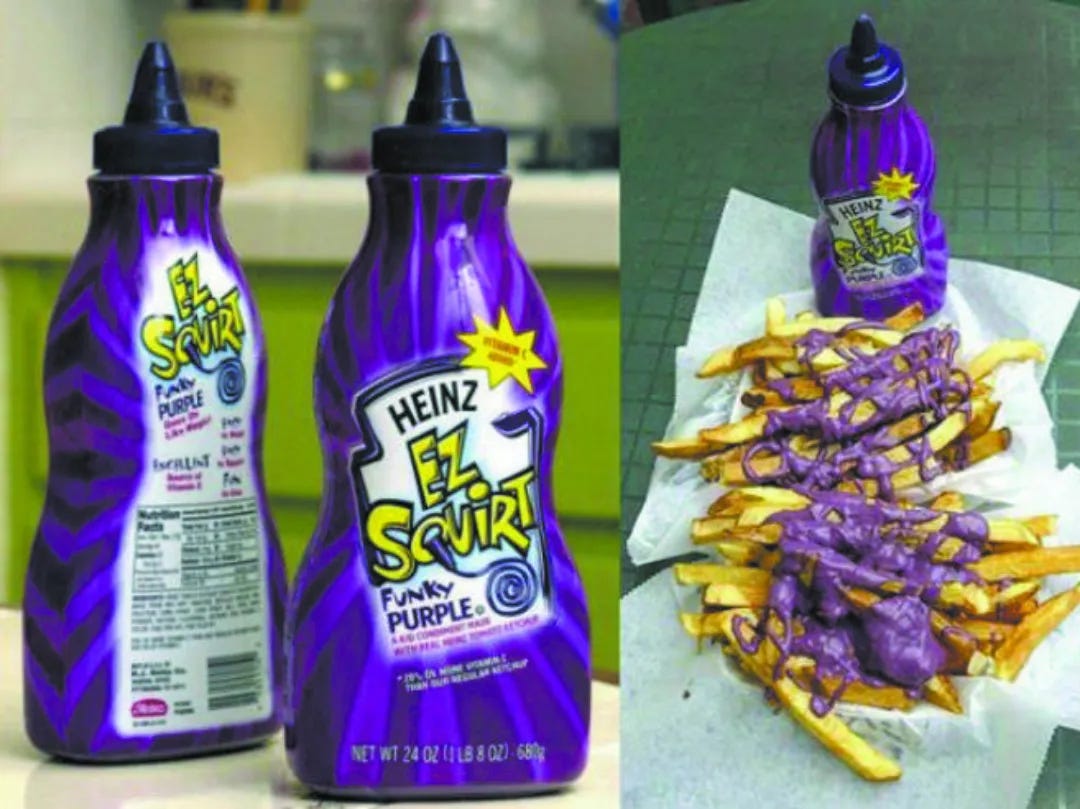
The first crack in this new paradise (besides permanent brain damage from straining to comprehend “eee - zed squirt”) was sausages. With hopes of bangers and mash for dinner, we turned over eight supermarkets in a single day searching for simple pork sausages. But all we found in America were two options: sweet italian or spicy, sweet italian or spicy. We opted for sweet italian and tearfully, gums rolling with whole fennel seeds, found ourselves dreaming of a cold and drippy high street, greasy strip-lit snack bars, and a bag of plain old sausage rolls.
But did the pilgrims give up at the first failed pea harvest? Did they scuttle back to Blighty when there was no barley for brewing? Not on your life. With masses of help from the locals, they eventually laid down their prejudice and and began, little by little, to love what was in front of them.
And adapt we did too, with the help of friendly local butchers, some ingenuity from my mum, and, more recently, a lot of local-ish YouTube tutorials. Being in a new place gave me the freedom to make sausage rolls exactly as I wanted: flaky, buttery, just the right thickness, extra peppery, and I even added a dash of maple syrup! I’ve been tweaking and tinkering with this recipe ever since my mum suggested we make our own sausage meat, and it’s become the flagship of my pop ups. Though I can’t say I’ve ever lost my prejudice against American sausage culture, I have learned to stop looking for what I lost, and start creating something new that brings me just as much joy.
So, on this Thanksgiving week, I’m bringing you a recipe that truly sustained me as I found my way in a new world. It’s not a Gregg’s sausage roll, and it never will be, but it is real, and here, and amazing. And for that I’m grateful.
Right. Elaborate metaphor over. Time to talk sausages.
What makes British sausages so different?
The most important distinction between American and British sausage culture is that, in Britain, a sausage is an end unto itself. No squeezing it out of casings. No hot peppers. No being a sideshow to smoked brisket. A sausage can stand proud as the eponymous hero of a meal, as in, “we’re having sausages for dinner.” Its flavour is pork, and its place is everywhere. Consider that, in America, the brightest a sausage is allowed to shine is in a hot dog. Then think about the way America treats its steaks, and you’re much closer to our truth.
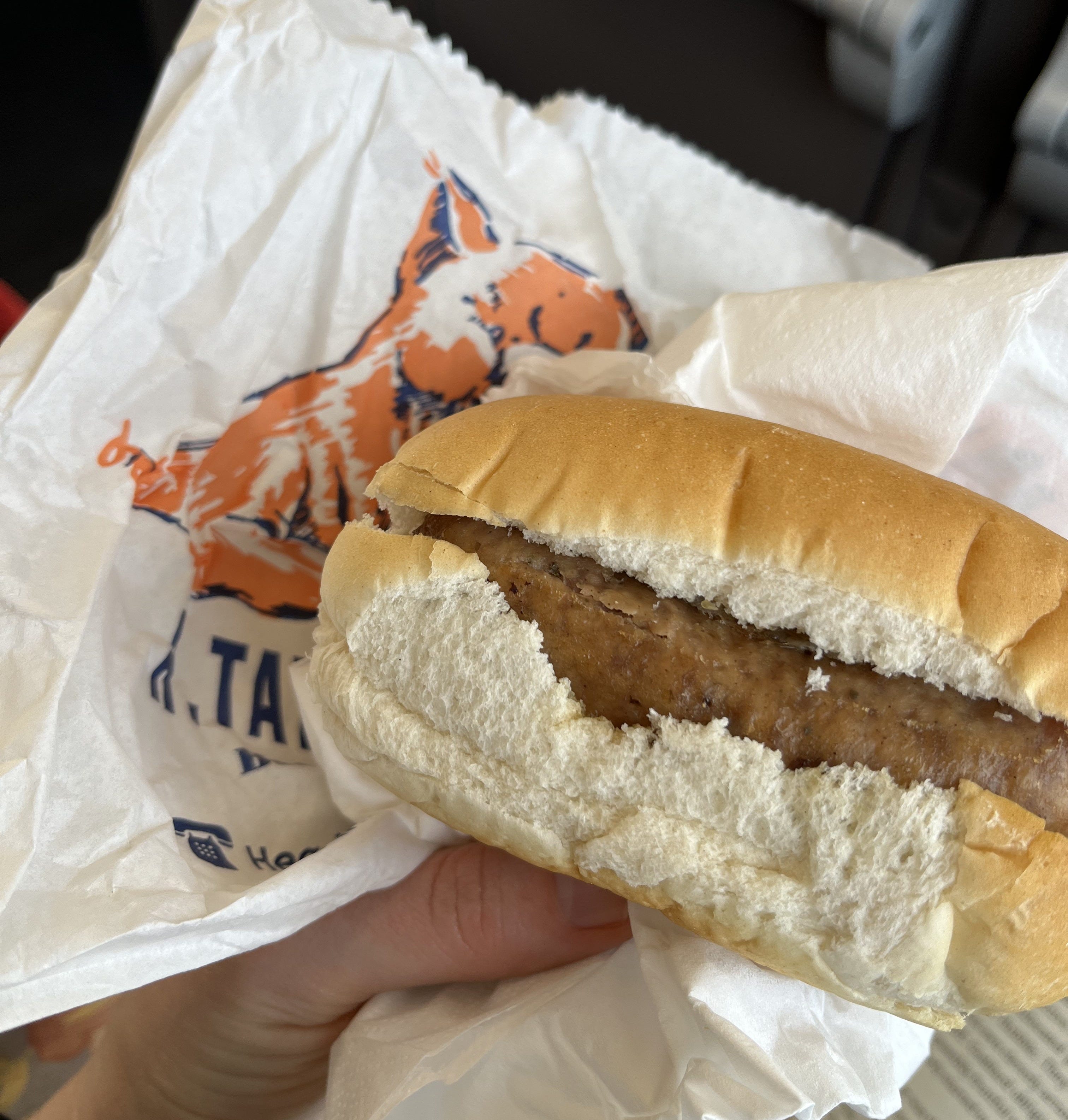
British sausages are fresh, not smoked or cured, and they contain a higher percentage of meat compared to American, German, or Italian counterparts, which matters when they’re the star of the meal. The most common mix is pork shoulder and belly fat, and regional variations in pigs’ breed and diet are responsible for most of the differences in flavour. Where flavourings are added it’s often to complement these natural variations, such as apple in the orchard-rich West Country, whose cores become feed for the pigs. If there is one consistent spice among Britain’s sausages, it’s black pepper, and tons of it.
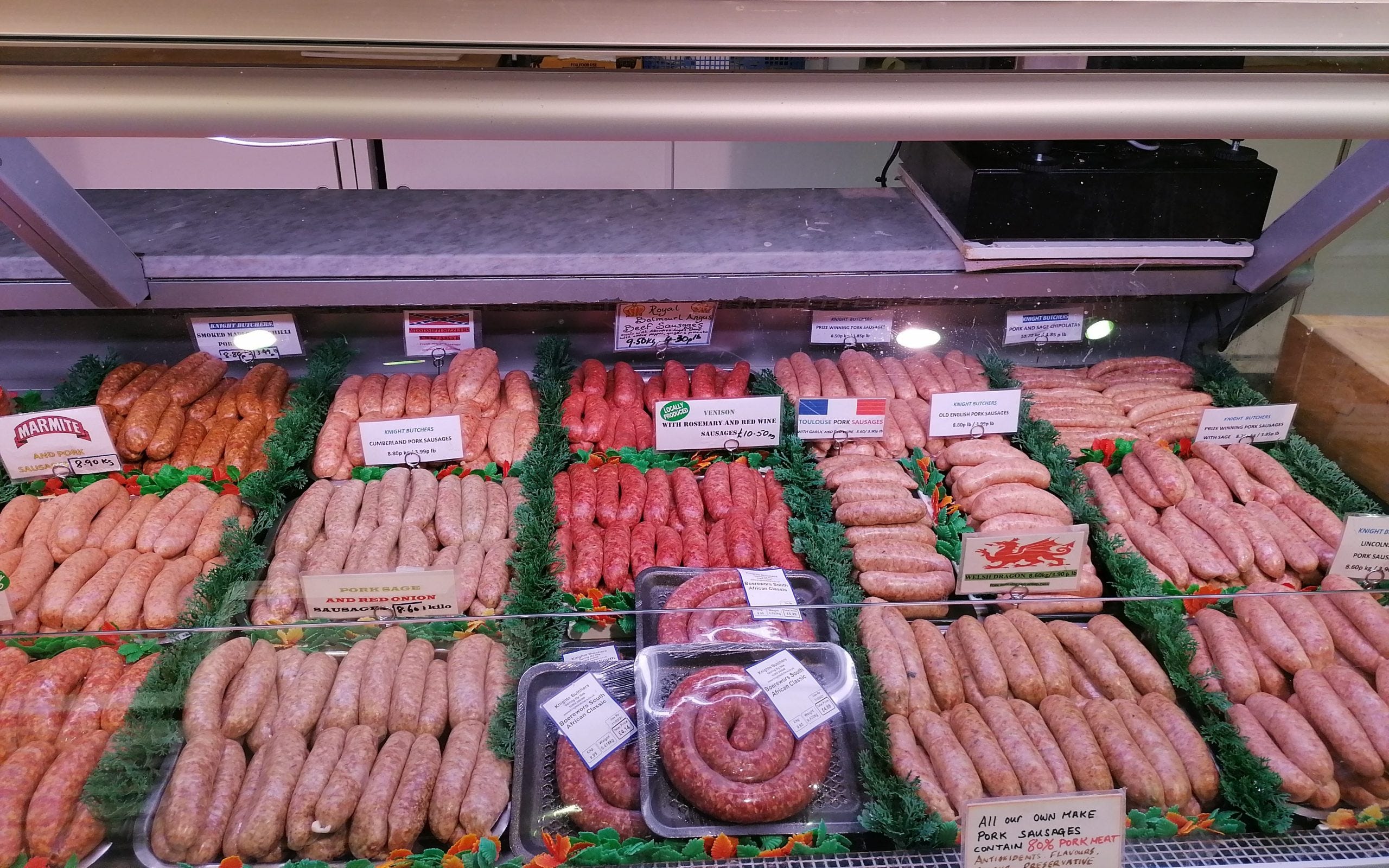
Variety comes not so much in flavour, but form. Three or four thin chipolatas make a fine breakfast, and two fat bangers atop mash and gravy are the nation’s favourite pub meal. The curling Cumberland sausage is an iconicly endless experience, as is the square slicing Lorne sausage, most common in Scotland and perfectly suited for slapping in a sandwich. Black and white puddings, types of blood and fat sausages, are served as thick medallions, usually with runny eggs and beans as part of a very complete breakfast.
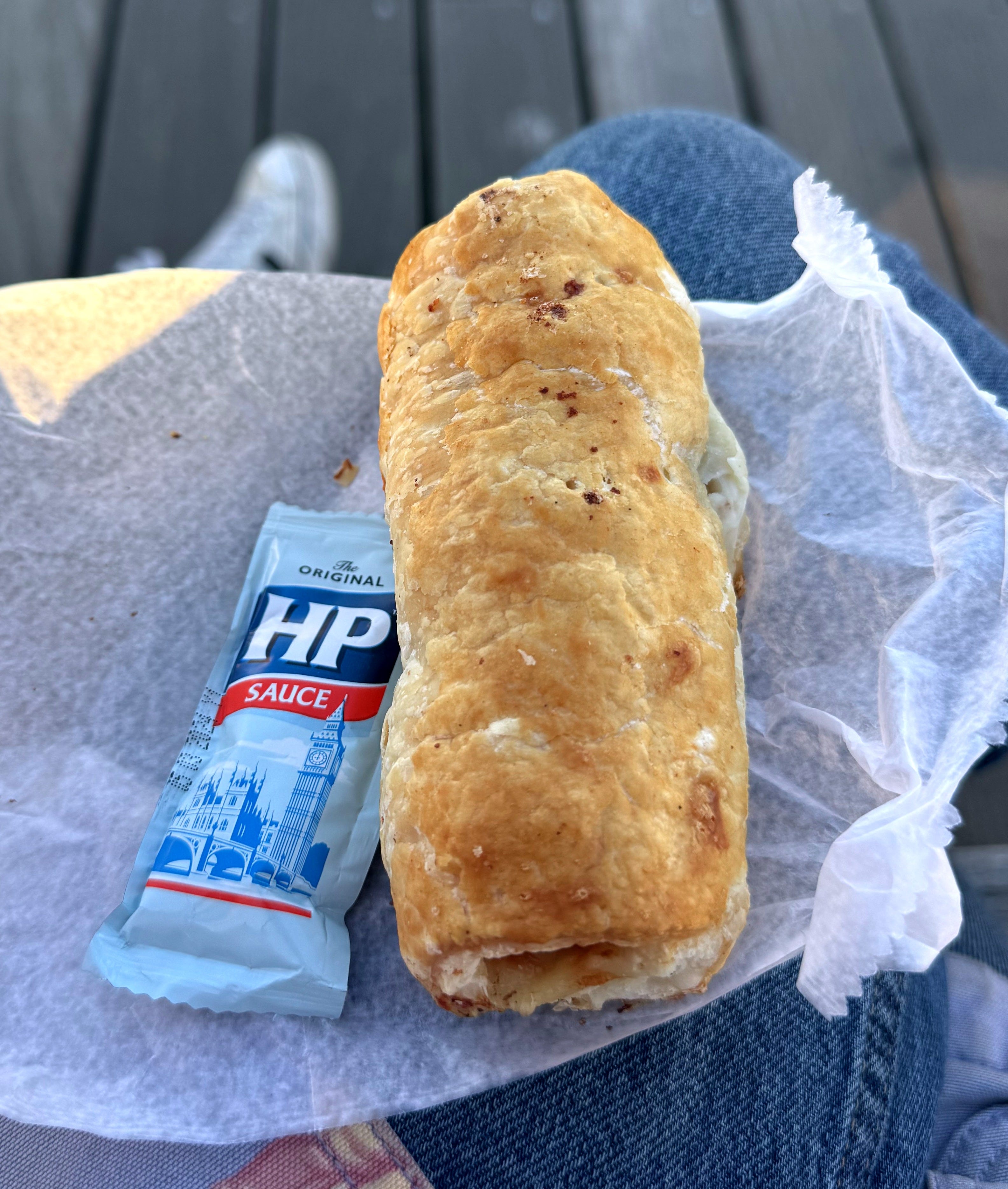
And then there’s the sausage that has been liberated from the plate entirely: the sausage roll. Finger-friendly pastry replaces casings, but besides that, the sausage inside is unfussed with. The sausage roll is seasoned enough to be eaten solo, but delicious with mustard, and (my own favourite), sublime with what we call brown sauce, favourite brand HP sauce, a vinegary blend of tomato, date, molasses and tamarind that, remarkably, tastes like none of those things.

In roll form, sausages have sustained laborers and picnic-ers and train travelers and wee-hour partygoers since time can remember. America does have pigs in blankets, but this cocktail-sausage-in-pastry is no match in size or substance for the real thing.
The nation’s favourite sausage roll is from the aforementioned Gregg’s and costs £1.25 (the vegan version is equally beloved). Gregg’s is a high-street chain bakery that sells pastries of bare minimum quality, which turns out to be just how we like them. Their sausage roll is greasy, pale, and lukewarm, but just so perfectly loose and peppery and existent that we’ve gone mad for them. Finer examples are abundant, but Gregg’s really does the sausage roll a unique honour by exposing its inherent perfection, as in, we can make it this shite and it’s still wonderful.
Sausage rolls are so available in England that no one in their right mind would make their own, but since we don’t have the luxury of Gregg’s in America, I’m here to teach you how. Once you’ve made sausage meat, they are a doddle to prepare, and making sausage meat is easier than waking a baby. There are no casings to contend with here, we are simply flavouring ground pork until it tastes more like ground pork, then rolling it inside puff pastry.
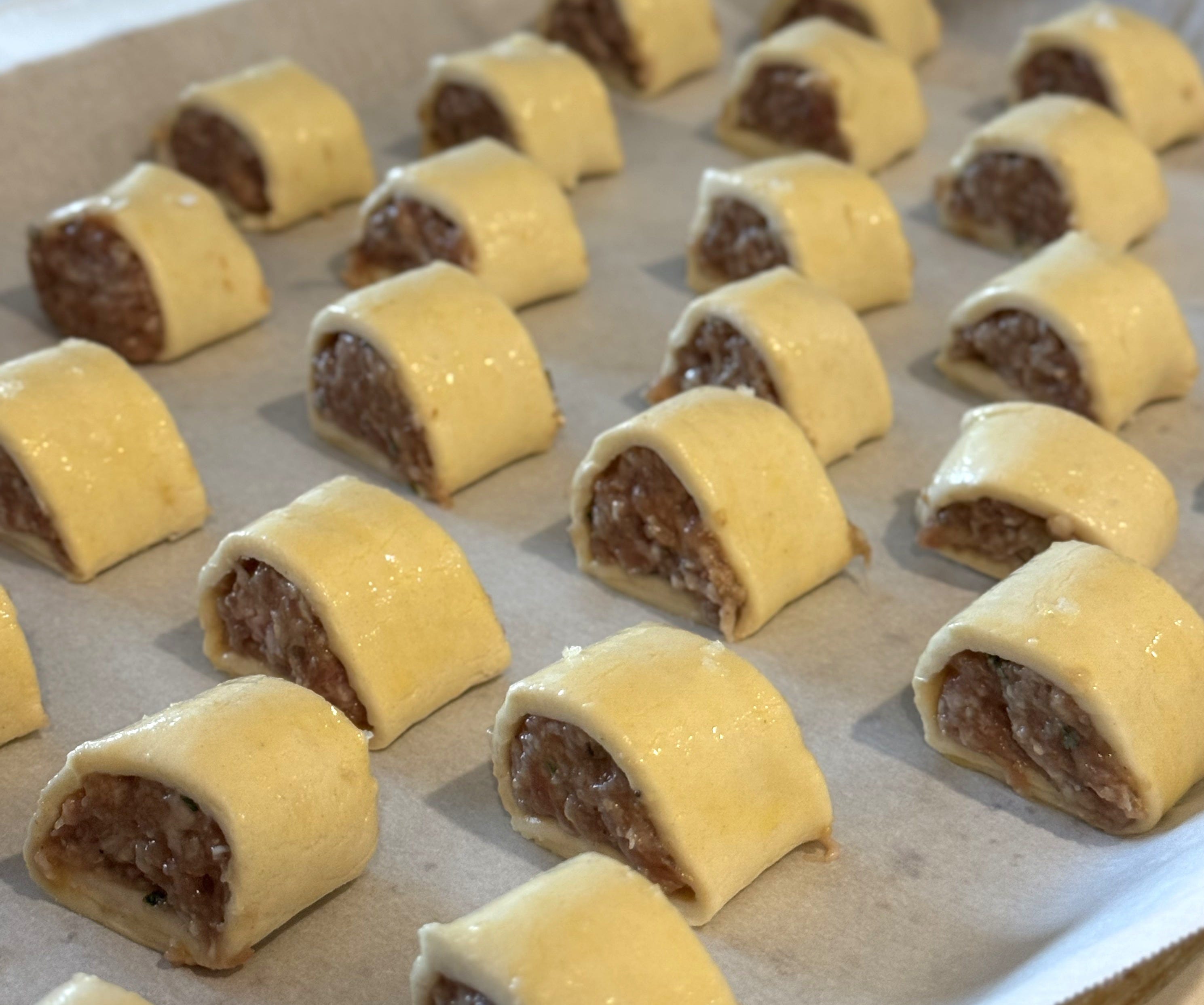
This recipe is based on my favourite regional sausage, the Gloucester, which is flavoured with sage and lots of pepper. There is no saga behind this recipe, it’s just lived with me and evolved gradually ever since the sweet italian incidicent. In a happy twist, I’ve come to respect the American practice of adding a little sweetness to sausage meat (see, adapting!), though here the sugar acts more like salt, tilting all the other flavours into balance. I like to use maple syrup, but feel free to use honey or just the good old white stuff.
I will not suggest you grind your own meat, since I know you won’t, and I certainly don’t, but I will urge you to use the best quality, most humanely-raised pork you can, with at least 15% fat. This always matters ethically, but since the pork is the main event here, it also really makes a difference to the dish (soapbox now back in cupboard).
If you’re born and raised in America, sausage rolls may be new to you, but so were sweet potatoes and corn once, so give them a go and consider them a damn fine addition to your Thanksgiving table, nay, your life.
The recipe
Makes enough for 12 full size sausage rolls, or 35-40 bite-size ones
800g puff pastry (2 14-oz packs of DuFour, my favourite brand, or one batch of homemade puff pastry, see below for recipe)
1 lb (450g) ground pork, at least 15% fat
1/2 small onion, finely diced
2 rashers/”strips” of bacon
6g salt
1/2 tsp fresh ground pepper (this is more than you think!)
1/4 tsp ground white pepper (if you can’t find this, add more black pepper)
1 egg
1/3 cup breadcrumbs (non traditional, but crucial for getting the loose texture of a sausage roll)
1/4 cup milk
4 sage leaves, finely chopped
4 springs thyme, finely chopped
1 tbsp worcestershire sauce
1/8 tsp ground clove
6-8 rasps of nutmeg
1-2 tbsp maple syrup or honey
1 egg for assembling
Flaky salt
Prepare the puff pastry. If using frozen pastry, let it thaw in the fridge until chilled, but soft enough to roll. If making your own, see below.
Make the sausage meat by dicing the onion and finely chopping your herbs, then add all ingredients together in a large bowl and mix by hand until uniform. Alternatively, add to the bowl of a stand mixer and mix with the paddle on medium low speed until uniform. Unlike with dumplings or meatballs, we’re not looking for a super smooth texture here, so whipping is not necessary. Chill in the fridge while you roll out the pastry. The flavours will deepen if you chill the sausage meat overnight, but feel free to proceed immediately.
Roll your puff pastry into a rectangle about 1/8” or 3mm thick. Mine typically measures about 16”x12”, or 40x30cm. If you want to be extra cheffy about it, let the rolled out pastry rest covered in the fridge for about 20 minutes. This step helps the pastry relax after being stretched out. Pastry will pull back a bit after rolling, and it’s marginally better if this happens in the fridge, not around your sausage rolls!
Assemble the sausage rolls: First, pre-heat your oven to 375F/190C. Prepare an egg wash by whisking 1 egg with 1 tsp water or milk. Lay out your puff pastry sheet on a floured surface with the longest side facing you. Starting about 1/2” from the bottom edge, lay the sausage meat in a tube about 1 inch/ 2.5cm thick. I like to use a piping bag for this, but feel free to use your hands to form it into a log. Brush the area about 3 inches/7cm above the sausage log with egg wash, and, starting from the bottom closest to you, roll the dough up and around the sausage log until the pastry meets at the bottom with about 1/2” / 1cm overlap. Use a sharp knife to cut along the edge of the pastry, and set this log aside. Repeat with the remaining pastry, piping long logs and rolling them with pastry until you run out. I usually get 3 logs about 16” long each. Brush the tops of the pastry logs with egg wash and sprinkle with flaky salt. Using a sharp knife, cut into lengths of your preference, about 4-5” for a standard sausage roll, or 1-2” for small bites. Lay on parchment-lined baking sheets with at least 2” between each roll. For a real Gregg’s look, score the tops of the sausage rolls with a sharp knife, being careful not to cut all the way through the pastry. Chill the prepared rolls for at least 20 minutes, which should be right around the time your oven is up to temperature. You can keep prepared sausage rolls chilled for up to 24 hours before baking.
Bake the sausage rolls for 25-30 minutes for small bites, or 40-45 minutes for full-size sausage rolls. You’re looking for golden brown tops and visibly puffed pastry. Don’t worry if it looks like a lot of fat is melting out: it is, and it’s not a problem. Once done, let cool for 5-10 minutes, and eat as soon as you can, preferably with a fiery mustard like Colman’s or brown sauce. I also do love ketchup. Sausage rolls are delicious at room temperature, but should not be left out for more than a few hours (not because that’s how we treat them in England but because that’s what the FDA says and I don’t have that kind of insurance).
Puff pastry recipe - this first appeared in my post on Eccles Cakes.
This recipe is adapted from Claire Saffitz and uses her fabulous method of grating butter
340g / 2 1/2 cups plain flour
1 tsp sea salt
2 tablespoons sugar
340g / 3 sticks unsalted butter, frozen
80ml / 1/3 cup ice cold water
80 ml / 1/3 cup fridge cold milk
4 tsp white wine or neutral vinegar (like rice vinegar)
Place a medium-sized bowl in the freezer. Grate the butter using a food processor with the grating attachment (this is very fun), or by hand on a box grater, holding the butter with a tea towel to keep it as cold as possible. Store the frozen grated butter in the cold bowl in the freezer.
Mix the 340g / 2 ½ cups plain flour, the 1tsp sea salt, and the 2 tbsp sugar in a large bowl. Add in half of the grated butter and toss to coat. Mix together the 80ml / ⅓ cup ice water, the same amount of cold milk, and the 4 tsp vinegar, and drizzle over the flour butter mixture. Mix with a fork to combine, adding extra water to any stubborn dry patches. Tip the mixture onto a clean surface and press together, kneading very gently just until it holds together as one mass. Press it into a rough square shape, wrap tightly and chill in the fridge for at least 20 minutes.
Lightly flour a work surface, then roll out the dough into a 6” x 18” long rectangle (15 x 45 cm). Place a quarter of the remaining butter in the middle third of your long rectangle. Fold one side of the dough over this, and add another quarter of the butter on top of the folded piece. Fold the final edge over the top and press down around the edges to seal in the butter. You should have a block that’s three layers of pastry alternating with two layers of grated butter. If the dough block feels warm and sticky, wrap it and chill for 20 minutes. If not, proceed.
Turn your dough block 90 degrees and roll out again to a 6” x 18” rectangle. Repeat the layering of grated butter here, which will use it all up. At this point I usually need to stop for a bit of fridge chilling, but if your block still feels nice and cold feel free to keep going.
Turn 90 degrees again and roll out one more time to a 6” x 18” rectangle. Fold the dough in thirds as you did before, without adding any more butter. Now chill for at least an hour, or until you’re ready to use the dough - up to 3 days in the fridge or 2 months in the freezer.