

Victoria Sponge
Not safe for good girls

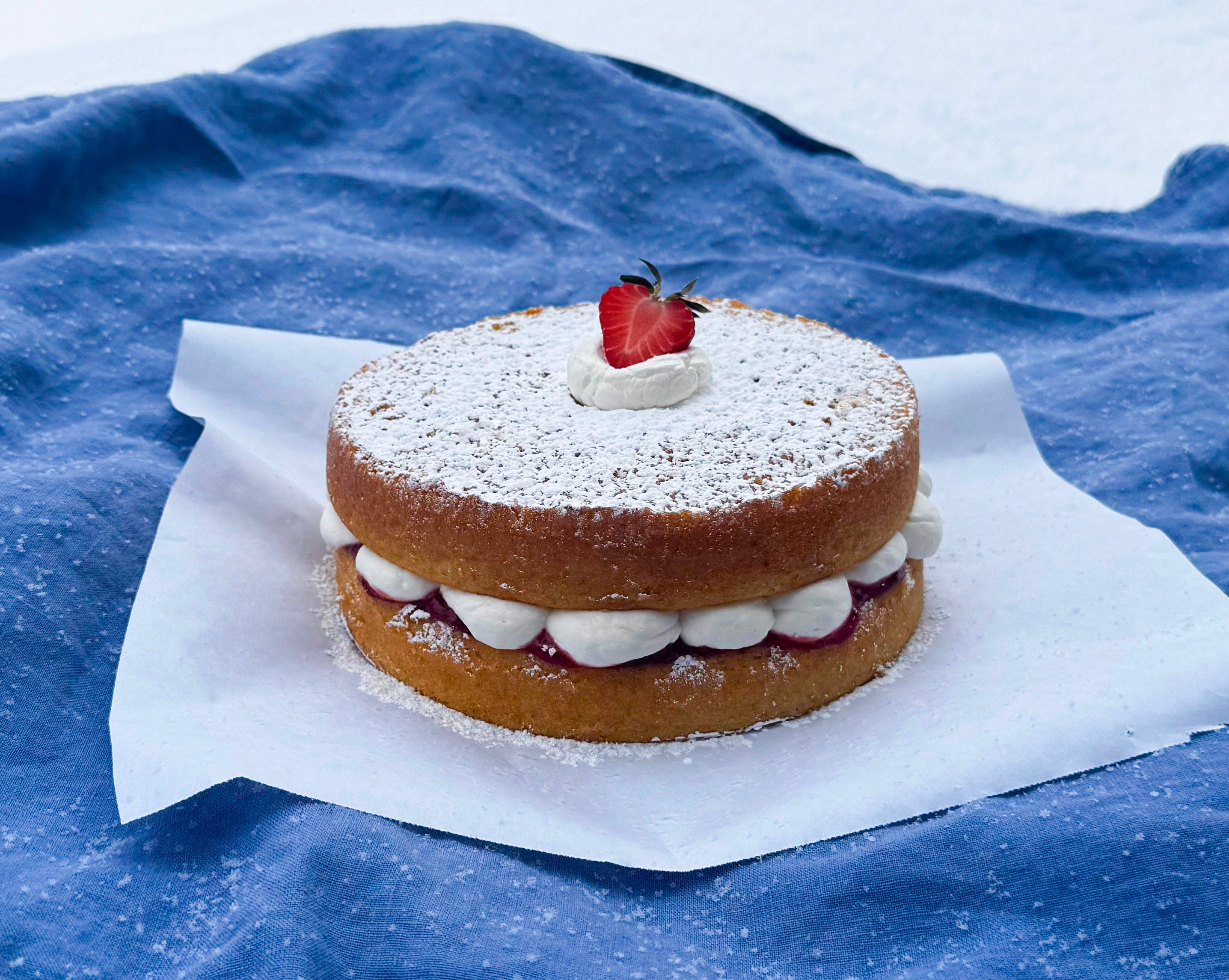
If there’s anyone to blame for my choices in life, it’s the Victoria sponge. Where other kids were satisfied with boiled sweets, she showed me the alchemy of sugar + fat + flour. Jelly babies and chocolate buttons wouldn’t cut it for me any more. Cake was it. And as I pled and grasped for more, she taught me her most ruinous lesson: you can have anything you want, if you can bake it yourself.
Victoria sponge is the first cake many British children learn to make, and most sensible ones stop there. For good reason. She is the best cake ever. Between sponge cake, jam, and fresh cream lie all the essential truths of good cooking: textural contrast, the right amount of acid, the toasty magic of maillard, sugar’s preservative power, air pockets to amplify flavour. Only boring people get bored, they say, and nowhere is that truer than with the Victoria sponge. I’ve made, truly, thousands of cakes in my life of every flavour and stripe, then I come back to this one and I’m freshly wrecked.
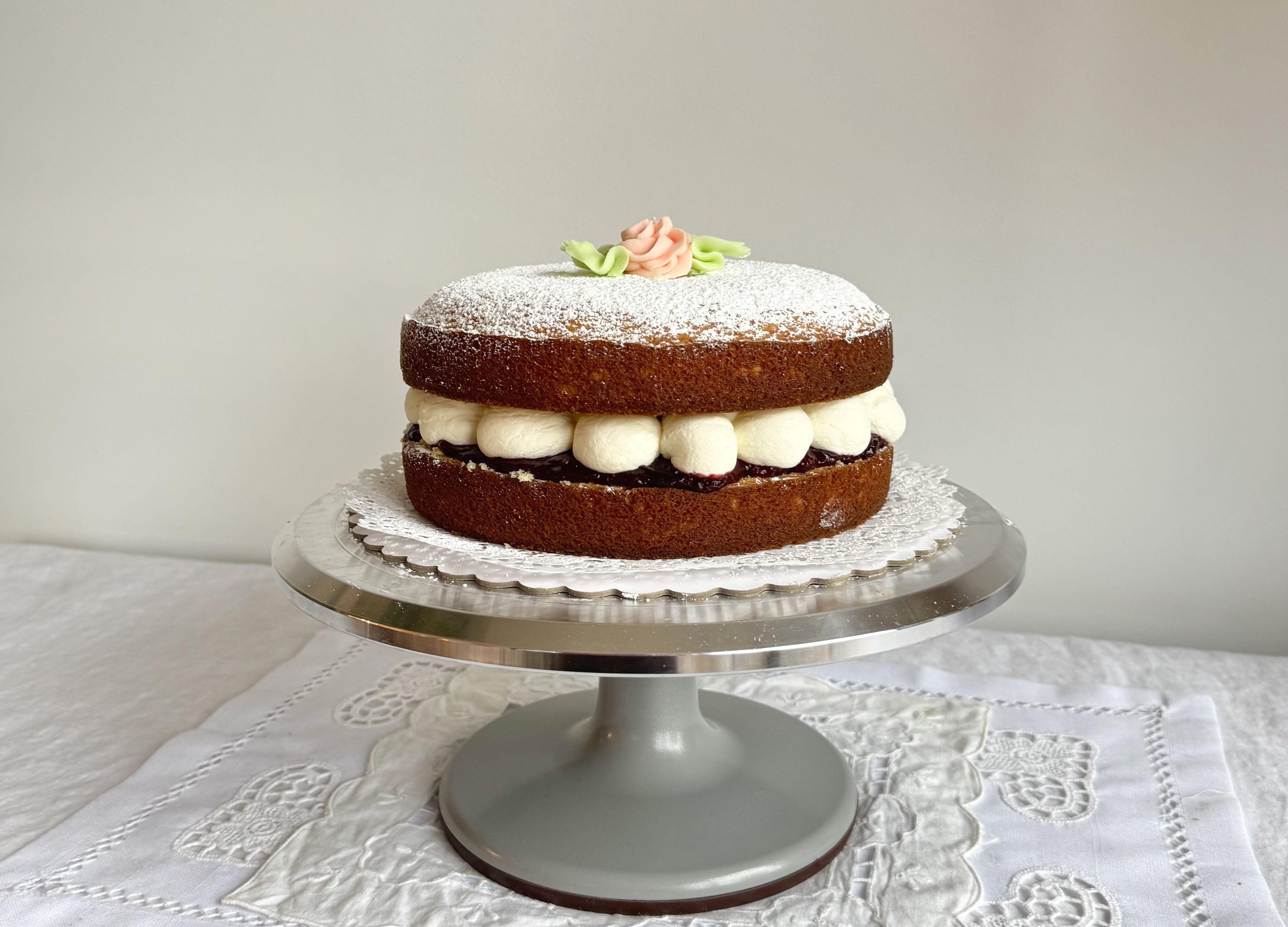
What is a Victoria Sponge?
Despite its pretense of delicacy, the Victoria sponge is a workhorse: two sturdy rounds of fat-enriched sponge, a generous smear of strawberry jam, and whipped cream, or buttercream for the hardos. In the annals of strawberry-and-cream cakes (e.g., strawberry shortcake, frasier), what distinguishes the Victoria Sponge is the presence of just jam, no fresh fruit, and a certain density of sponge cake that makes this read as “food”, not just “cake”. There’s nothing dainty about it, and nor should there be. Victoria sponge is for the people: builders on a tea break, tourists wearied by stately homes, and nans fueling their gossip.
